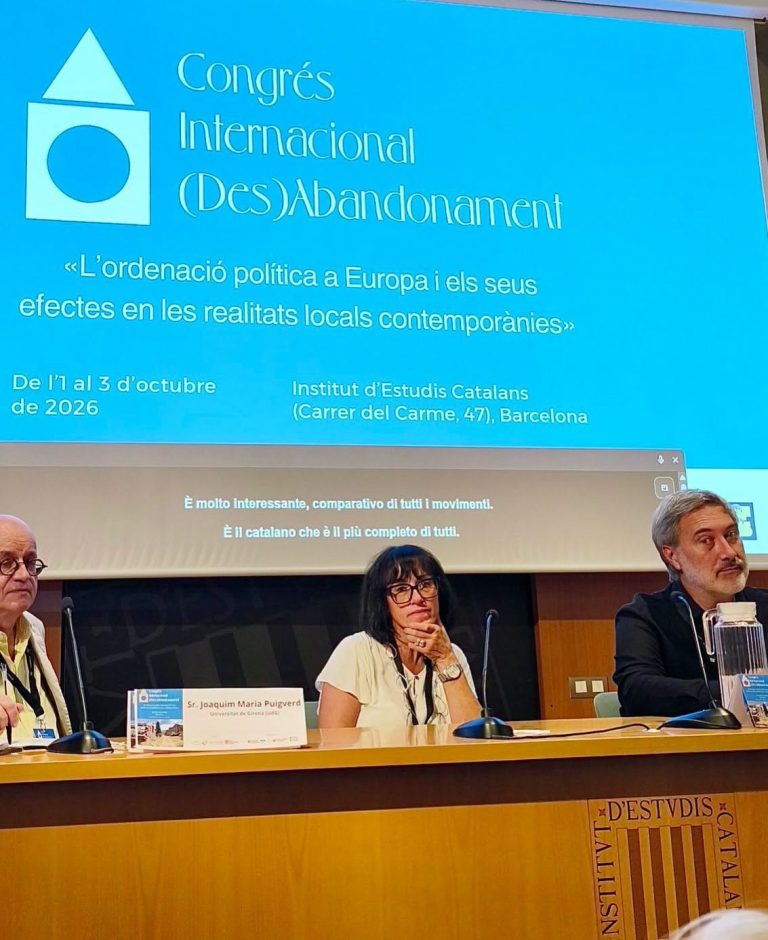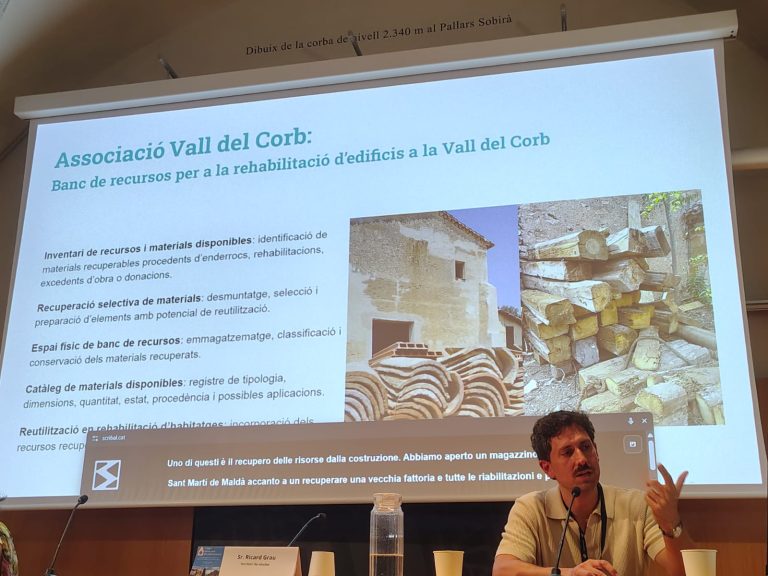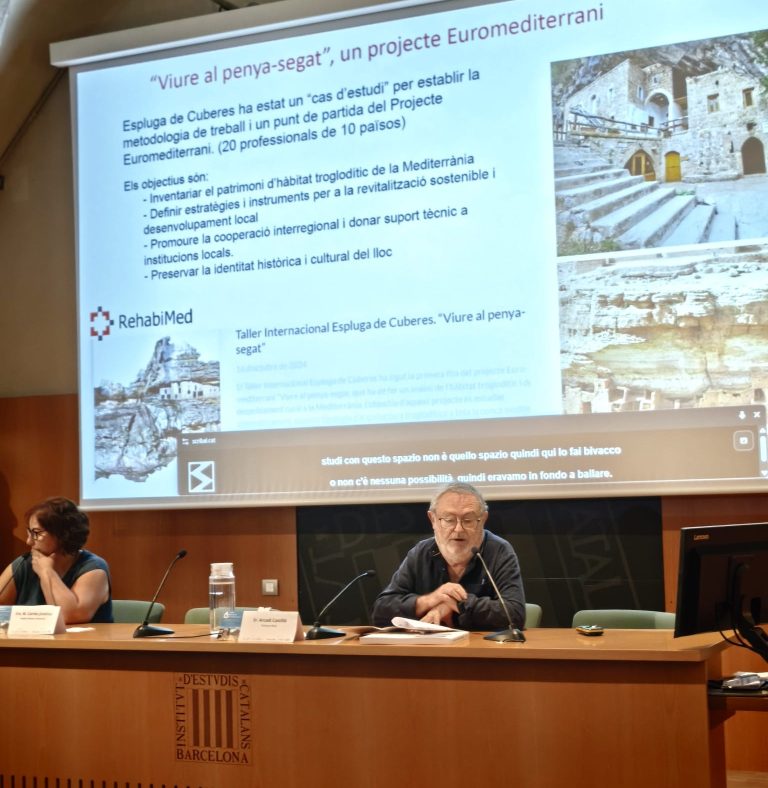


RehabiMed, in collaboration with Pirineus.Watt, took part in the International Congress “(Dis)Abandonment. Political planning in Europe and its effects on contemporary local realities”, held from 1 to 3 October 2026 at the headquarters of the Institut d’Estudis Catalans (IEC).
Arcadi Castilló presented the paper “The Impact of Abandonment on the Cultural Landscape. The Case of l’Espluga de Cuberes”. From an interdisciplinary perspective, the paper focused on the effects of rural abandonment on the territory. It is not only villages that are lost, but also what UNESCO has defined as a cultural landscape: the combined work of people and nature, resulting from their interaction over time; a record of the evolution of human settlements, shaped by the natural environment and by social, economic and cultural factors.
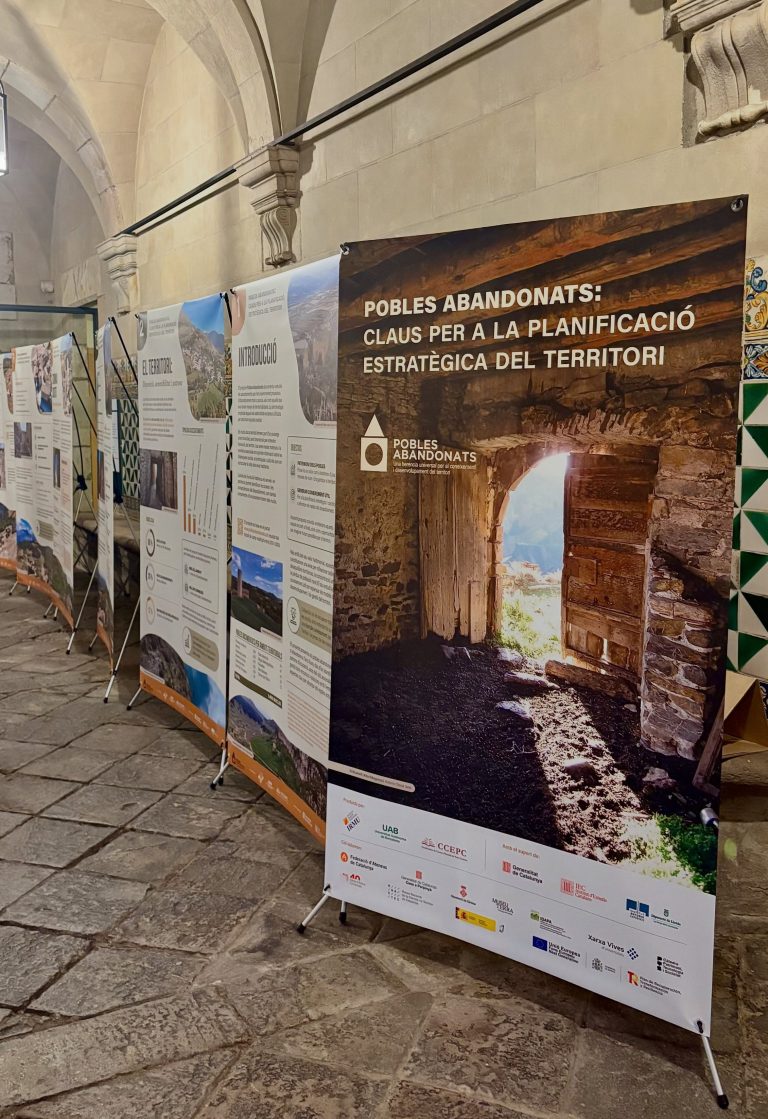
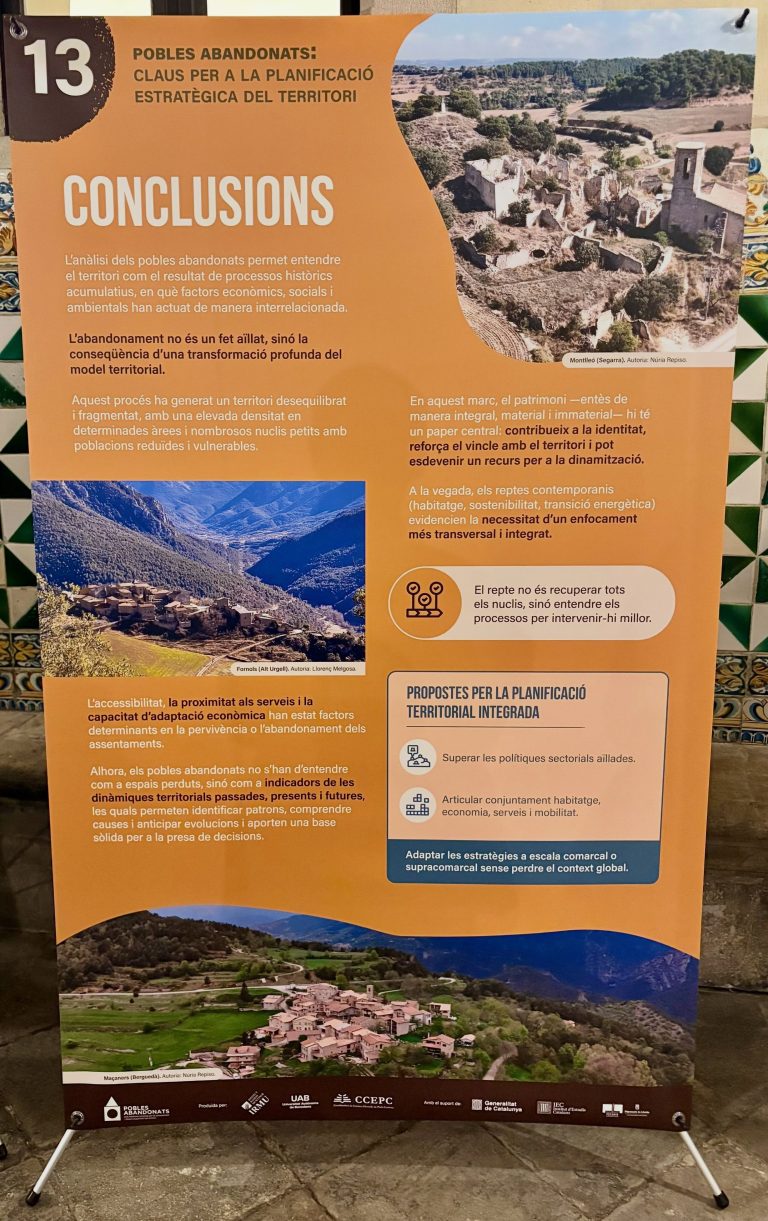
The abandoned mas of Espluga de Cuberes and its surroundings are a unique example of a cultural landscape that deserves to be preserved. At present, however, it has no form of heritage protection. Only its natural surroundings are protected, through Natura 2000, the PEIN or the Geopark. Unfortunately, current Catalan heritage legislation does not recognise cultural landscapes, making their preservation as such more difficult, as well as the possibility of giving them a new life through a new model of development—one that focuses on the opportunities they offer rather than seeing them as a problem. As part of the Congress, the exhibition “Abandoned Villages. Keys to Strategic Territorial Planning” was inaugurated in the cloister of the Institut. The exhibition offers a perspective on settlements that have experienced processes of abandonment, with the aim of understanding the territory, valuing its heritage and imagining possible futures.